
99% of real estate agents are invisible to AI. Here's what we learned.
Getting recommended is Simple, not easy. You have to have your accounts consistent, but not copy and paste; let MOC Media show you how!
REAL ESTATEAI RECOMMENDATIONSGOOGLE BUSINESS PROFILEONLINE MARKETING W/AI
Dre Williams
7/28/20269 min read

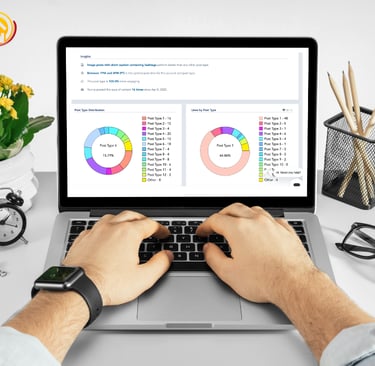
Introduction to AI Visibility in Real Estate
In recent years, the integration of artificial intelligence (AI) into various sectors has transformed the way businesses operate, particularly in real estate. AI visibility refers to the extent to which real estate agents and their listings are recognized and recommended by AI-driven platforms during property searches. This concept is increasingly significant for real estate professionals as it directly impacts their market reach and potential to connect with prospective buyers.
The implication of AI recommendations in property searches cannot be overstated. When a homebuyer utilizes AI tools, the algorithms analyze vast amounts of data to propose properties that match the user’s preferences and needs. If a real estate agent's listings are not visible to these algorithms, they miss out on crucial opportunities to reach potential clients. This situation creates an imbalance in the market, favoring those agents who have optimized their online presence for AI visibility.
As we delve deeper into the study conducted by Moc Media, it becomes evident that a staggering majority of real estate agents are not sufficiently visible to AI systems. Our analysis highlights that nearly 99% of agents do not show up in AI-driven property recommendations. This finding raises pressing questions regarding the current strategies used by real estate professionals to engage with AI technologies and the steps necessary to improve their visibility in an increasingly digital marketplace.
Understanding and adapting to the AI landscape is crucial for real estate agents aiming to thrive in today's competitive environment. The transformation of the buyer journey, influenced heavily by AI recommendations, necessitates that real estate professionals reassess their online presence and implement strategies that enhance their visibility to artificial intelligence. It is imperative for agents to recognize the importance of AI in influencing buying decisions and to adapt accordingly.
Findings from the AI Recommendation Audit
The AI Recommendation Audit conducted by Moc Media serves as a significant insight into the visibility of real estate agents within contemporary artificial intelligence systems. This assessment was meticulously designed to evaluate how well agents can be identified and recommended through AI-driven platforms. To achieve this, the audit utilized a robust methodology centered around 20 real-world buyer prompts, which simulated genuine inquiries that potential clients might present when searching for real estate services.
These buyer prompts ranged from typical questions about property values to specific requests regarding neighborhood amenities. By monitoring the responses generated by AI algorithms, the audit aimed to reveal just how many unique agents or teams were recommended in relation to these prompts. The findings were quite stark and concerning, illustrating a pronounced gap in AI visibility among real estate professionals in the Real Estate Multiple Listing Service (RMLS) footprint.
Out of an extensive pool of approximately 15,000 realtors, the audit revealed that only 64 unique agents or teams appeared in the AI-generated recommendations. This highlights a troubling trend where only a small fraction of agents are recognized by AI systems, effectively rendering the vast majority invisible. Such results suggest that while technology plays a growing role in the real estate sector, many agents remain unrepresented in these crucial digital spaces. The implications of this disconnect are significant for both agents seeking visibility and consumers searching for real estate services, underscoring the pressing need for agents to enhance their AI presence.
Survey Insights on Buyer Behavior and AI
Recent data from the July 2026 Journal de l'Agence survey conducted by Inoveo3D reveals a transformative shift in buyer interactions with generative artificial intelligence (AI). This survey highlights that the percentage of buyers engaging with AI technologies has surged dramatically from merely 17% to an impressive 67% within an 18-month period. This notable increase underscores the growing acceptance and reliance on AI tools among potential homebuyers, indicating a significant trend that real estate professionals cannot afford to overlook.
The implications of this shift are particularly concerning for traditional real estate agents. The survey further uncovers a staggering statistic: 91% of real estate agents were absent from AI-generated recommendations during buyers' property searches. This statistic raises alarm bells within the industry, as it signals a missed opportunity for agents to connect with clients who are increasingly utilizing AI in their decision-making processes. Without a visible presence in AI-driven platforms, many agents risk becoming obsolete in a rapidly evolving market.
It is evident that the landscape of real estate is undergoing a paradigm shift, largely influenced by advancements in technology. Buyers now expect seamless integration of AI into their home-buying journey, requiring agents to adapt their strategies to remain relevant. Investing in AI visibility can significantly enhance an agent's ability to connect with clients, foster relationships, and provide a tailored experience that aligns with modern buyer expectations.
Professionals in real estate must recognize the necessity of embracing AI technologies, not only to capture the attention of buyers but also to elevate their services. The integration of AI tools into business models represents a pivotal opportunity for agents to redefine their roles in the real estate market and ensure their continued success.
The Structure Behind AI Recommendations
The foundation of AI recommendations is built upon the curation of structured public information. AI systems deploy sophisticated algorithms that analyze various data sources to gauge the visibility and performance of real estate agents. A significant part of this analysis is derived from widely accessible platforms such as Google Business Profile, Zillow, and multiple local media outlets.
Google Business Profile, for instance, plays a critical role in shaping an agent’s online presence. It aggregates business information, solicits customer reviews, and presents pertinent details that enhance an agent's visibility to potential clients. Consistency in the information provided—such as contact details, operating hours, and location—ensures that AI systems can accurately assess the reliability and relevance of an agent.
Zillow, another key player, offers a comprehensive view of real estate transactions, agent performance metrics, and client testimonials. The platform’s algorithms favor agents who frequently update their profiles and engage with clients. As such, maintaining a robust profile on Zillow can significantly influence an agent's visibility algorithmically, leading to better exposure in search results.
Moreover, local media sources contribute additional layers of contextual data that AI uses to evaluate agents. News articles, public announcements, and community engagement pieces provide insights into an agent's reputation and activity within their market. By consolidating data from these various platforms, AI systems can offer recommendations that reflect not just quantity but also the quality of an agent’s visibility.
In order to improve AI-driven recommendations, it is essential for real estate agents to cultivate comprehensive, consistent, and compelling profiles across the aforementioned platforms. Such diligent efforts not only amplify their online presence but also enhance their standing in the algorithms that guide potential clients to choose their services over others.
Understanding Trust Signals for AI Recommendations
In the realm of artificial intelligence, particularly in the context of real estate services, understanding trust signals is critical for establishing credibility. Trust signals are indicators that AI systems utilize to assess the reliability and competence of real estate agents. Various factors contribute to these signals, which can significantly influence an agent's visibility in AI-driven recommendations.
One key element is the volume of reviews an agent receives. A higher number of positive reviews not only suggests client satisfaction but also indicates experience and established relationships within the market. This metric plays a pivotal role in helping AI algorithms determine which agents stand out as trustworthy based on client feedback and overall reputation.
Profile completeness is another essential factor that AI prioritizes when evaluating agents. A comprehensive profile, inclusive of qualifications, professional experience, and personal specialties, provides a thorough insight into an agent's capabilities. This transparency reassures both the AI and potential clients that the agent is both qualified and reliable, enhancing trust.
Additionally, a real estate agent's production history is a significant trust signal. AI systems often assess the track record of agents based on previous transactions, revealing their effectiveness and proficiency in successfully closing deals. Agents with a robust production history are more likely to attract attention, as they display proven performance in the industry.
Local citations further enhance the reliability of real estate agents in AI recommendations. References from reputable local sources and consistent presence in community activities signal that an agent is well-integrated into the local market. These citations validate an agent's credibility, making them more attractive to potential clients and, consequently, to AI systems.
In conclusion, trust signals such as review volume, profile completeness, production history, and local citations collectively shape the credibility of real estate agents in AI recommendations. Understanding and optimizing these elements is essential for agents aiming to improve their visibility in an increasingly AI-centric industry.
Barriers to AI Visibility for Real Estate Agents
In the realm of artificial intelligence, visibility is essential for real estate agents to thrive. Unfortunately, several barriers impede their ability to achieve recognition in AI systems. One primary obstacle is the presence of incomplete profiles. Real estate agents often fail to fully detail their qualifications, services, and experience, creating gaps in their digital presence. These incomplete profiles limit the likelihood of being recommended by AI algorithms, which rely on comprehensive information to make informed suggestions to consumers.
Another major barrier is the lack of review diversification. AI systems assess the credibility of profiles based on user-generated reviews; however, many agents may only accumulate feedback from a narrow clientele or fail to solicit reviews altogether. This absence of varied perspectives diminishes the perceived value of agents’ profiles and can obstruct them from being spotlighted in AI recommendations. When consumers search for real estate professionals, a balanced array of positive reviews elucidates the agent's reliability and effectiveness, thereby enhancing visibility.
Additionally, the deficiency of specialized content further exacerbates invisibility in AI systems. Agents who do not produce or share industry-specific content may miss out on engaging potential clients and showcasing their expertise. By failing to contribute relevant knowledge through articles, blog posts, or social media discussions, agents reduce their chances of being indexed favorably by AI algorithms. Strong content not only demonstrates authority but can also amplify engagement, leading to increased algorithmic visibility.
These barriers—hindered by incomplete profiles, insufficient review diversity, and a lack of specialized content—combine to create an environment where real estate agents may remain unseen by AI systems. Addressing these issues is crucial for agents striving for visibility in an increasingly digital marketplace.
Moc Media’s Philosophy: Redefining Success in Real Estate
The landscape of real estate is undergoing a significant transformation, influenced heavily by advances in artificial intelligence (AI). Moc Media recognizes that traditional measures of success, such as merely achieving prominent Google rankings, are becoming obsolete. Instead, the emphasis has shifted towards achieving a level of AI visibility that allows agencies to be recommended by AI systems. In this new paradigm, the focus is on enhancing the AI recommendation score, which evaluates how likely an AI system is to suggest your agency to potential clients.
Central to this evolution is the concept of entity optimization. This process involves refining an agency's online presence so that it is not only visible but also accurately represented to AI algorithms. By optimizing for AI entities—information points that AI systems use to generate recommendations—real estate agents can bolster their visibility in a digital ecosystem that is increasingly driven by data rather than traditional search engine metrics.
As AI continues to reshape consumer behavior and expectations, real estate agents must adapt their strategies accordingly. The importance of being acknowledged as an authority within an AI-driven framework cannot be understated. Success is not about the volume of traffic generated through organic searches, but rather the quality of recommendations made by AI technologies. Understanding and leveraging AI visibility can potentially place an agency ahead of its competitors, ensuring sustained relevance in a rapidly changing market.
Moc Media’s philosophy is centered on this shift in focus. It encourages agents to embrace these technological advancements and recognize the pivotal role AI plays in shaping future interactions between customers and real estate professionals. By doing so, agents can not only secure their position in the market but also redefine what success looks like in the age of AI.
Actionable Recommendations for Enhancing AI Visibility
In an era where artificial intelligence is reshaping how real estate agents connect with potential clients, enhancing AI visibility is essential. Here are several pragmatic recommendations aimed at real estate professionals striving to elevate their presence in the digital landscape.
Firstly, optimizing your Google Business Profile should be a top priority. This is the first point of contact for many prospective clients looking for real estate services. Ensure that your business information is complete and accurate. Include relevant keywords in your description to improve searchability within local search results. Regularly update your profile with new photos, services, and posts that showcase your expertise and latest offerings.
Next, diversifying your online reviews can significantly impact your credibility and visibility. Encourage satisfied clients to leave reviews on various platforms, including Google, Yelp, and Facebook. A diverse set of reviews not only enhances your reputation but also signals to AI algorithms that your business is trustworthy and popular, which can boost your visibility further in search results.
Producing educational content is another effective strategy for improving AI visibility. By creating blog posts, videos, or infographics that address common questions or challenges faced by potential buyers and sellers, you establish yourself as a knowledgeable resource in the real estate market. This could include topics such as home buying tips, market trends, or financing options. Engaging content not only attracts traffic but also positions you favorably in search engine rankings.
Finally, taking the initiative to implement these strategies can be pivotal. For professionals wanting to optimize their AI recommendation status, we invite you to schedule an AI visibility audit with Moc Media. This step could be the key to unlocking greater visibility and driving more leads to your business.